
Live Casino Game Shows: Why They Are Becoming an Alternative to Traditional Table Games
Live casino game shows have changed the way online gambling combines entertainment with real-money betting. Instead of concentrating entirely on roulette, blackjack or baccarat, these games feature professional presenters, colourful studios, oversized prize wheels and interactive bonus rounds. Titles such as Crazy Time, MONOPOLY Live and Sweet Bonanza CandyLand illustrate how familiar television-style formats have entered online casinos. Their appeal extends beyond the possibility of winning money: players can follow a live broadcast, watch unexpected events unfold and participate without learning complicated card strategies. By 2026, game shows have become an established category within live casino collections, offering a different experience from conventional table games. Understanding their rules, advantages and limitations helps explain why they attract attention and when traditional casino games may remain the better choice.
How Live Casino Game Shows Differ from Traditional Casino Games
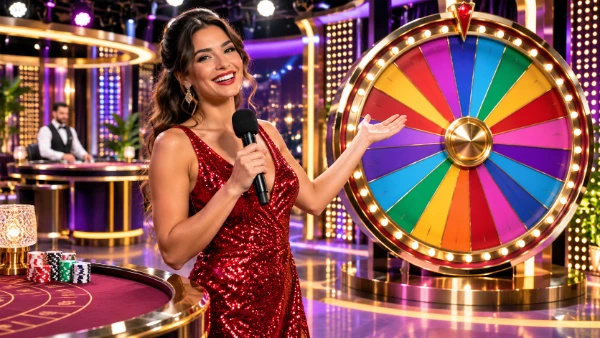
Traditional casino games are generally built around established rules and recognisable equipment. Roulette uses a numbered wheel, blackjack involves decisions about drawing or standing on cards, and baccarat compares the results of two hands. Live versions reproduce these activities through cameras positioned around real casino tables. Game shows take a different approach by borrowing the structure of television entertainment. Their studios often contain large wheels, elaborate scenery, bright lighting and dedicated areas for special rounds. The presenter becomes the central figure, explaining what is happening and maintaining the pace between results. Although both categories involve real-money wagering, the atmosphere is noticeably different. A blackjack table prioritises the progression of individual hands, whereas a game show usually creates a shared event around a single outcome that everyone watches together.
The distinction also affects the amount of knowledge required to participate. Blackjack players benefit from understanding basic strategy, while roulette participants need to recognise different betting positions and their corresponding payouts. Many game shows simplify the initial decision to choosing a number, symbol or bonus segment. In a money-wheel game, for example, a player selects an available betting position before the presenter spins the wheel. If the result corresponds to the selected position, the relevant payout applies. However, the apparent simplicity of placing a bet should not be confused with simplicity in the underlying mathematics. Different segments can have very different probabilities, and special features may introduce additional conditions. Players still need to understand the paytable, the frequency of winning outcomes and the possible return on their stakes.
Presentation is another important difference. In ordinary live roulette, the dealer’s responsibilities mainly involve accepting the close of betting, spinning the wheel and announcing results. A game-show presenter performs those practical duties while also acting as a host. They introduce features, explain bonus events and communicate with viewers through the broadcast. The studio may use animated graphics and sound effects to make particular outcomes more noticeable. Some games also combine physical equipment with computer-generated bonus sequences, so the experience is not necessarily determined by a wheel alone. This distinction matters when evaluating fairness: individual stages may use different methods of producing results. The visual production creates entertainment, but it does not improve a player’s chances or alter the mathematical rules governing payouts.
The Role of Live Presenters and Interactive Entertainment
Human presenters provide an element that conventional computer-generated casino games cannot reproduce in exactly the same way. A host can respond naturally to unexpected moments, explain an unusual result and maintain a consistent atmosphere throughout a broadcast. Presenters may work in different languages depending on the studio and the casino offering the game. Their communication is generally directed towards the entire audience rather than a particular individual, although some broadcasts include moderated chat features. This makes the experience closer to watching a live television programme than operating a conventional slot machine. At the same time, communication with the host does not mean players control the game. Their betting decisions remain separate from the presenter’s performance, and any interaction must follow the rules of the particular title.
Shared participation can make game shows especially distinctive. Everyone watching a wheel-based game normally sees the same spin, even though individual players may have selected different betting positions. A bonus feature can therefore become a common event, with the entire audience following its progress before the next betting round begins. This differs from many online slots, where each player experiences an independent sequence of spins. However, a common result does not mean everyone receives an identical payout. One participant might have backed a numbered segment, another might have selected a bonus feature, and a third might have no winning selection. The emotional response to the broadcast can be collective, while the financial consequences remain entirely individual. That distinction is important when assessing the social appeal of these games.
Visual effects also influence how players experience time and anticipation. Music, countdowns, animated transitions and changes in studio lighting create recognisable stages within each round. These elements help viewers follow the action, particularly when several bonus features are available. They can also make a relatively short sequence feel more eventful than a conventional card hand. The drawback is that entertaining presentation may draw attention away from the total amount being wagered. A player who watches several entertaining rounds may underestimate how many stakes have been placed during the session. Sound effects and enthusiastic commentary should therefore be understood as production features rather than indications that a favourable result is approaching. A game can be enjoyable to watch without offering better financial conditions than a traditional casino game.
Popular Live Casino Game Shows and Their Main Features
Evolution has played an important role in establishing the modern live game-show format through titles that combine physical studio equipment with digital bonus features. Crazy Time, originally introduced in 2020, provides a well-known example. Its main game centres on a large money wheel, with numbered positions and four named bonus games: Cash Hunt, Pachinko, Coin Flip and Crazy Time. A separate feature known as the Top Slot can introduce multipliers into the round. The bonus games use different visual presentations and mechanisms, including interactive selections and digital elements. The result is a format where the basic action is easy to recognise, but the available outcomes differ considerably in value and frequency. Importantly, the presence of several bonus games does not mean that one is guaranteed to appear within a particular number of spins.
MONOPOLY Live demonstrates how an established entertainment brand can be adapted into a live casino game. The Evolution title uses a 54-segment wheel containing numbered positions, CHANCE segments and special 2 ROLLS and 4 ROLLS positions. The latter activate a digital bonus board featuring the familiar Mr. Monopoly character. During these rounds, the character moves across a three-dimensional board and collects prizes or multipliers according to the game’s rules. The format retains the recognisable appearance of the board game without reproducing ordinary Monopoly gameplay. Players do not purchase properties or negotiate with opponents; they wager on wheel outcomes and watch the resulting features. The distinction is worth understanding because familiarity with the original board game does not provide any strategic advantage in the casino version.
Pragmatic Play’s Sweet Bonanza CandyLand offers another approach by adapting the visual identity of a popular slot series into a live-hosted game show. Its studio features a large wheel and three principal bonus games: Sweet Spins, Candy Drop and Bubble Surprise. Sweet Spins incorporates slot-style gameplay, Candy Drop uses a virtual ball-drop sequence, and Bubble Surprise can produce multipliers or activate further features. The game also includes Sugar Bomb mechanics that can modify particular outcomes. This combination illustrates why the boundary between live casino games and slots has become less rigid. A single title may include a physical wheel, animated features and familiar slot mechanics. Nevertheless, players should examine the actual rules rather than assume that a recognisable theme guarantees the same betting conditions or payouts as the original slot.
Bonus Rounds, Multipliers and the Difference Between Entertainment and Value
Bonus features are central to the identity of many casino game shows because they provide outcomes that look and behave differently from ordinary wheel results. A numbered segment may produce a straightforward payout, while a bonus position can activate an additional game with several possible prizes. These features often receive more attention in promotional videos because they provide varied scenes and the possibility of unusually large multipliers. Their financial value, however, depends on both how often they occur and what they pay when activated. An impressive maximum multiplier tells players very little about the probability of receiving it. The largest advertised prizes are generally exceptional outcomes, not representative results. A sensible comparison should therefore consider the full paytable rather than concentrating exclusively on the most visually memorable bonus rounds.
Multipliers can be particularly confusing because different games apply them in different ways. Some multiply a payout associated with a selected position, while others affect a prize generated during a bonus round. Certain features may provide additional spins, random awards or opportunities to choose between concealed results. These mechanics cannot be treated as interchangeable. A displayed multiplier of 100x, for example, does not automatically mean the player’s entire combined wager will be multiplied by 100. Its effect depends on the qualifying bet and the rules of the feature. Optional betting enhancements can introduce further conditions or additional costs. Before participating, players should establish which selections qualify, how winnings are calculated and whether any optional features change the amount at risk. Understanding those details is more useful than attempting to predict when a bonus will appear.
Return to player, commonly abbreviated as RTP, offers another way to understand the financial structure of a game. The figure represents the theoretical proportion of total stakes returned as prizes over a sufficiently large number of rounds under the stated rules. It is not a prediction for an individual session. A theoretical RTP of 96%, for instance, corresponds to an average return of £96 for every £100 wagered across a very large volume of play, not a promise that someone staking £100 will receive £96 back. Game shows can also have considerable volatility, meaning that results may include frequent losses, smaller prizes and occasional larger awards. Published RTP figures can differ between titles, betting choices or game versions. Players should use the information displayed for their particular game instead of assuming that all live game shows offer similar mathematical returns.
Why Game Shows Appeal to Players and What to Consider Before Playing
Accessibility is one reason live game shows can attract people who find traditional casino tables less approachable. Blackjack involves decisions that influence the mathematical cost of playing, while baccarat has different betting options and rules that may be unfamiliar to newcomers. Many wheel-based shows allow a participant to understand the basic selection process after reading a relatively short explanation. Their familiar television-style presentation also makes it possible to follow the action without participating financially. However, easy-to-understand controls should not be mistaken for favourable winning probabilities. A game with simple betting choices can still have a substantial house advantage. Furthermore, not every game show is equally accessible: titles containing several bonus stages, optional features or unusual payout rules may require more careful reading than a straightforward roulette bet.
Mobile accessibility has contributed to the practicality of this entertainment format. Live game shows can be offered through casino websites and mobile-compatible interfaces, allowing players to watch a studio broadcast without using a desktop computer. Betting panels, current results and game information are usually arranged around the video feed. The quality of that experience depends on the device, available screen space and internet connection. A small display may make detailed paytables or secondary betting options harder to examine, while an unstable connection can interrupt the broadcast at an inconvenient moment. The betting deadline is particularly important because wagers generally need to be accepted before the round closes. Players should check confirmation of their bets and review the operator’s interruption rules instead of assuming that a delayed screen accurately reflects the current state of the game.
Traditional table games nevertheless retain advantages that game shows do not necessarily offer. Roulette provides clearly defined betting positions and a relatively consistent structure, while blackjack allows players to make meaningful decisions within each hand. Baccarat follows a straightforward comparison of card totals and does not require an elaborate bonus sequence. For people who prefer established rules, fewer visual distractions or a more measured pace, these characteristics may be preferable. The financial comparison can also favour particular traditional games. A conventional European roulette bet has a theoretical house edge of approximately 2.7% under standard rules, while blackjack played with an appropriate basic strategy may offer a lower edge under favourable conditions. Game-show betting options vary too widely to make an equivalent general claim, so comparisons must be made using the rules and RTP of specific titles.
Fairness, Responsible Gambling and the Future of Live Casino Entertainment
The presence of a real presenter does not, by itself, establish that a casino game is fair or independently monitored. Legitimate live casino operations require suitable controls over their equipment, game procedures and digital components. The UK Gambling Commission, for example, distinguishes between the integrity checks required for physical gaming equipment and the testing of random-number systems used in digital gambling products. Physical wheels need appropriate installation and ongoing checks, while software-driven outcomes must meet applicable randomness requirements. Players should confirm that an operator is authorised to provide the relevant gambling service in their jurisdiction and that the game rules, theoretical returns and settlement conditions are available. A polished studio or familiar television brand should never replace these checks. Availability also varies by country, and a game offered in one regulated market may not be permitted in another.
Responsible participation requires particular attention because the entertainment structure can encourage repeated betting. Game-show rounds often follow one another, and a succession of bonus animations can make an extended session feel like a continuous programme. Setting a spending limit before starting is more reliable than deciding how much to risk after several results. Players should also consider a time limit, especially when following an uninterrupted live broadcast. Losses should not be chased, and a bonus feature that has not appeared for some time should not be regarded as overdue. Each new round follows its own rules and probabilities, regardless of what happened previously. Where gambling is legally available, only eligible adults should participate, and the operator’s deposit limits, account controls and self-exclusion options should be accessible. Gambling should never be treated as a dependable source of income.
Looking beyond 2026, live casino game shows have room to develop through more varied studio formats, improved mobile presentation and combinations of physical and digital entertainment. Existing titles already demonstrate how recognisable brands, live presenters, prize wheels and animated bonus games can operate within a single experience. Future development may make broadcasts more interactive, but greater visual sophistication will not necessarily produce better odds or more transparent rules. Traditional roulette, blackjack and baccarat are unlikely to disappear simply because television-inspired games offer a different form of entertainment. Instead, the two categories serve overlapping but distinct preferences. Game shows emphasise presentation, shared events and varied bonus mechanics, while conventional tables provide established rules and familiar betting structures. The most meaningful choice is the one made with a clear understanding of the game, its costs, its limitations and the risks attached to every wager.